In the world of technology, there’s no shortage of innovation. Yet, few concepts are as fascinating and as closely watched as Holographic displays. Imagine interacting with digital content that floats in mid-air, responding to your gestures and movements without any physical screen in sight. It sounds like something straight out of a sci-fi movie, but the idea of holographic displays has steadily moved from the realm of fantasy to something that could potentially revolutionize the consumer tech industry.

As holography gains ground, the debate rages: Is it the next big leap in tech or just another overhyped trend? In this article, we will explore the potential future of holographic displays in consumer tech, examining both the opportunities and challenges that come with this cutting-edge technology.
What Are Holographic Displays?
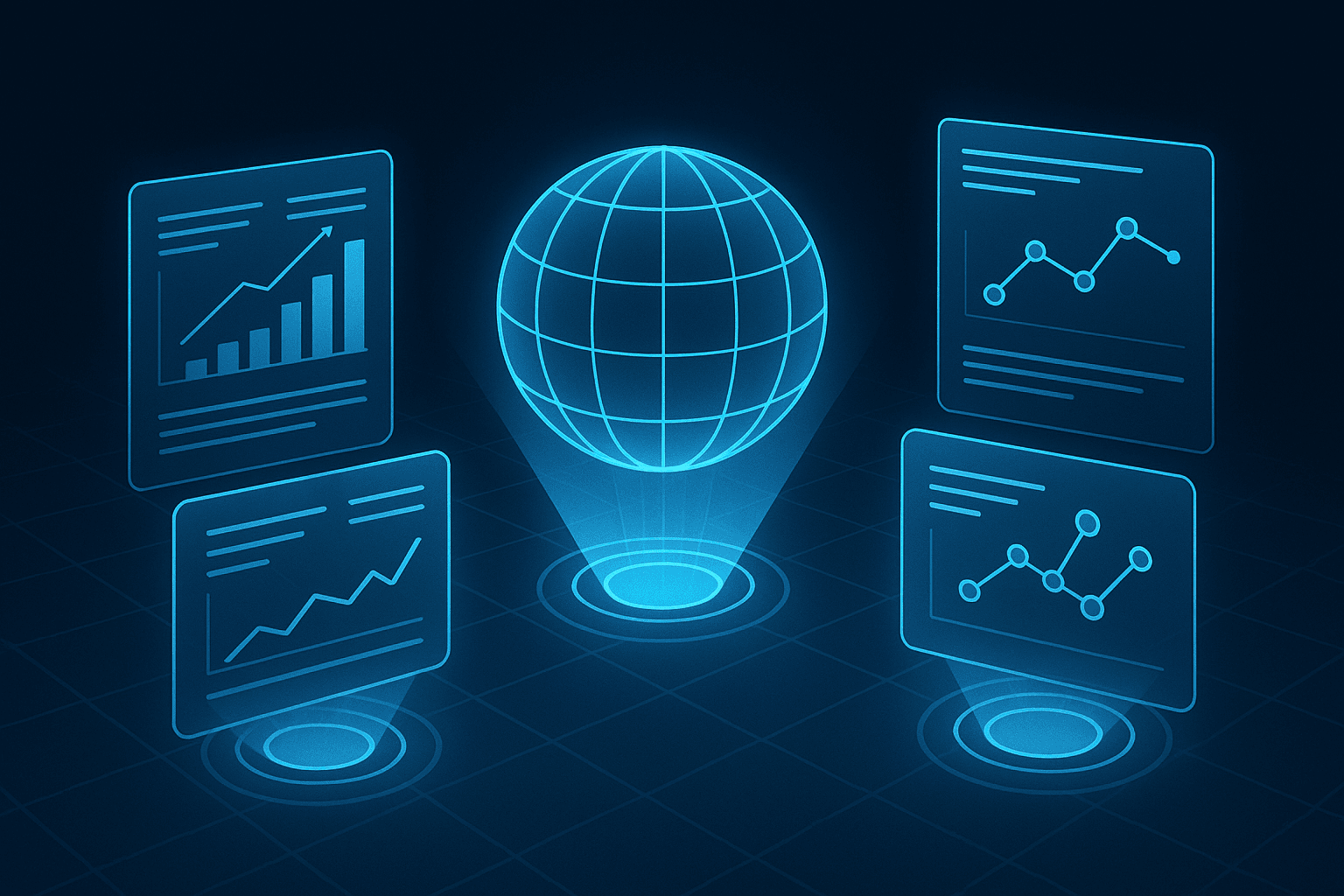
Before diving into the future, it’s important to understand what holographic displays actually are. Simply put, they are devices that create 3D images or video projections that appear to float in space. These displays use light interference to project objects that can be viewed from different angles, providing a more immersive experience compared to traditional 2D screens.
There are two major types of holographic displays:
- Volumetric Displays – These create 3D images by projecting light into a volume of space, allowing users to see the object from all angles.
- Pepper’s Ghost Displays – This is a simpler form, often used in entertainment, where a reflection of a 3D object is displayed on a glass or transparent surface, creating the illusion of depth.
Though these displays still have a long way to go in terms of practical and consumer-grade applications, the potential for real-world use is enormous.
Key Advantages of Holographic Displays in Consumer Tech
Let’s begin with the bright side of things. The potential advantages of holographic displays in consumer tech are compelling, and these benefits make this technology worth keeping an eye on.
1. Immersive User Experience
Holographic displays promise to offer a completely immersive experience. For entertainment (such as movies or games), this technology could push virtual reality (VR) and augmented reality (AR) into new territories. Imagine watching a film where characters appear to walk around you or playing a game with 3D avatars that respond to your physical movements. This level of immersion could change how we consume digital content altogether.
2. Enhanced Communication
In the near future, holographic displays could revolutionize remote communication. With the rise of video calls and virtual meetings, the need for more interactive, lifelike communication tools is growing. Instead of a flat screen, users could engage with lifelike holograms of their colleagues, friends, or family members in real-time, making digital communication feel more natural.
3. Improved Design and Prototyping
For industries like architecture, engineering, and product design, holographic displays could enable designers to visualize products in 3D before committing to physical prototypes. These holograms would allow for more efficient design processes, enabling quick alterations and a better understanding of how products would function in the real world.
4. Revolutionizing Education and Learning
Holograms have the potential to transform how we learn and teach. Imagine a biology class where students can interact with a holographic human body to see its inner workings in 3D. This can make learning more interactive and engaging, especially in fields like medicine, engineering, and science, where complex concepts often need visual aids.
Challenges to Overcome: Why the Future of Holographic Displays Is Not So Simple
While the prospects of holographic displays are incredibly exciting, there are significant challenges that must be addressed before they become mainstream in consumer tech.
1. High Cost and Technical Barriers
Holographic displays require specialized hardware, such as high-powered lasers, advanced sensors, and intricate optics, which makes them expensive to manufacture. This high cost means that, currently, only businesses with large budgets can afford to incorporate this technology into their operations. For the technology to reach the average consumer, significant cost reduction and efficiency improvements must occur.
2. Resolution and Image Quality
Though holographic displays are impressive, they are still limited by resolution. Current holograms can look pixelated and lack the clarity and smoothness of high-quality 2D screens. While researchers are making progress in improving image quality, achieving the level of detail and color vibrancy that consumers expect from their devices is still a work in progress.
3. Limited Content Availability
Another major obstacle to the widespread adoption of holographic displays is the lack of content. Unlike standard 2D video or images, holograms require specialized content to be created. This means that for consumers to fully embrace this technology, there must be an abundant supply of holographic media, which is still a rare commodity today.
4. User Experience Challenges
To create an effective holographic display, the technology needs to track the user’s movements and gestures in real-time, a challenge that current systems struggle with. There are also issues like eye fatigue and discomfort when interacting with these displays for prolonged periods. These issues need to be resolved for the technology to become truly practical for everyday use.
Real-World Applications and Use Cases
While the idea of holographic displays sounds futuristic, there are already a number of real-world applications that showcase the technology’s potential.
| Industry | Potential Use Cases |
|---|---|
| Entertainment | Holographic concerts, interactive movie experiences, 3D gaming with holograms |
| Healthcare | Medical imaging, 3D surgery planning, remote diagnostics |
| Education | 3D models for anatomy, history, engineering, and space exploration |
| Retail | Virtual product demonstrations, holographic fashion shows |
| Communication | Virtual meetings, holographic calls, and interactive social platforms |
| Advertising | Holographic billboards, interactive store displays, and dynamic ads |
In entertainment, for instance, HoloLens, developed by Microsoft, has already shown great promise in delivering immersive holographic experiences. Virtual concerts, like those held for deceased artists (e.g., Tupac at Coachella), have also demonstrated how holograms can enhance the way we experience music and performances.
The Road Ahead: What Does the Future Hold for Holographic Displays?
Looking to the future, several key developments will shape the trajectory of holographic displays in consumer tech. Here are some key predictions:
1. Technological Improvements
As research continues, the technology behind holographic displays will only improve. Innovations in laser technology, holographic data storage, and real-time rendering will lead to higher resolution images, faster refresh rates, and better user interaction. Expect smaller, more efficient displays that can be integrated into everyday devices, such as smartphones, tablets, and wearables.
2. Mass Adoption in Specialized Sectors
While general consumer use might still be a few years off, sectors like healthcare, education, and entertainment could see widespread adoption of holographic displays. In these industries, where immersive, interactive experiences are already in demand, holography could quickly become a valuable tool.
3. Integration with AR/VR
Holographic displays are likely to be integrated with augmented reality (AR) and virtual reality (VR) technologies, creating hybrid systems that blend the real world with digital content in exciting new ways. This fusion could bring about the next big revolution in gaming, entertainment, and professional applications.
4. Consumer-Grade Holographic Devices
In the coming decade, we may start seeing affordable, consumer-grade holographic displays. With the continued miniaturization of technology and improvements in production, it’s likely that we’ll have holographic displays in our homes, on our phones, and even on our wearables.
Conclusion: A Technological Leap or Overhyped Dream?
So, what is the future of holographic displays in consumer tech? In the end, it seems that while holographic displays have enormous potential, they are not quite ready to completely replace traditional screens. However, the ongoing advancements and growing interest from both tech companies and consumers suggest that the future is promising.
As with any emerging technology, the journey from concept to mainstream adoption is full of hurdles. But with technological advancements, better accessibility, and an increased understanding of consumer needs, holographic displays could eventually become as common as smartphones and flat-screen TVs.
Whether this technology proves to be a true revolution or an overhyped trend remains to be seen. But one thing is clear: the future of holographic displays is something worth watching.
Key Takeaways
- Holographic displays offer immersive experiences for entertainment, education, healthcare, and more.
- The high cost and technical limitations still pose significant challenges to mass adoption.
- Content availability and user experience are key obstacles that must be addressed for the technology to become widespread.
- Industries like healthcare and education may see earlier, more practical applications of holographic displays.
- The future of holography looks promising, with continuous improvements on the horizon.
As technology evolves, holographic displays could one day become as ubiquitous as flat-screen TVs—if they can overcome the current barriers standing in their way.