The Future of Adaptive Computing
The modern laptop is evolving—and fast. With hybrid work, AI-driven workflows, and the need for flexible productivity setups, traditional clamshell laptops are starting to feel restrictive. Enter the Lenovo ThinkBook Modular AI PC, a bold concept device unveiled at MWC 2026 that reimagines what a business laptop can be.
This modular AI-powered laptop is not just another incremental upgrade—it’s a radical shift toward customizable, adaptive computing. Designed with a “carry small, use big” philosophy, it aims to combine portability, scalability, and AI-enhanced productivity into one cohesive system.
In this detailed article, we’ll explore its features, performance potential, modular design, battery limitations, comparisons, and whether it truly represents the future of AI PCs.
What is the Lenovo ThinkBook Modular AI PC?
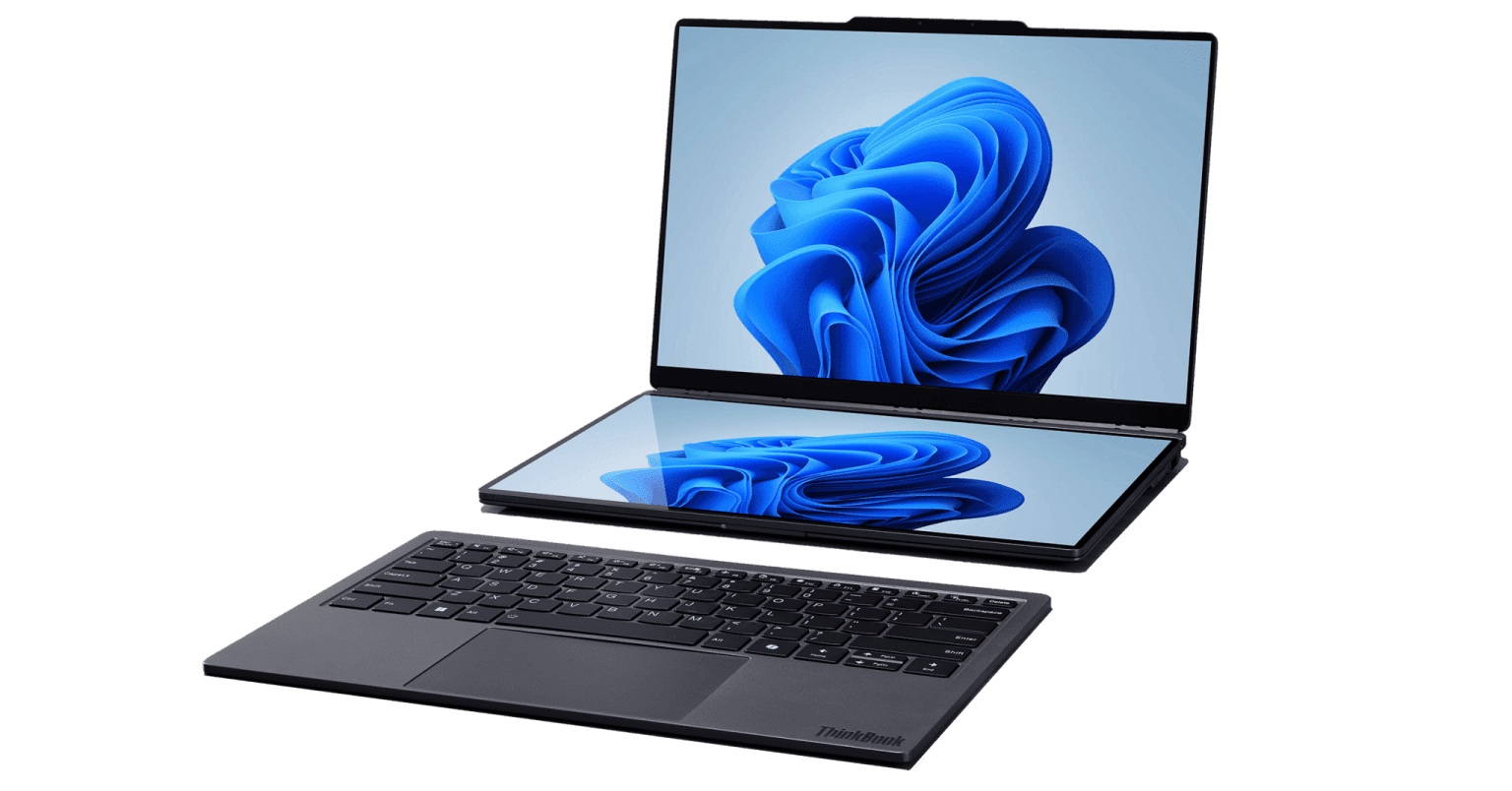
The Lenovo ThinkBook Modular AI PC is a concept laptop built around a 14-inch ultra-thin base system that supports interchangeable modules such as displays, keyboards, and ports.
Unlike traditional laptops, this device allows users to reconfigure their setup dynamically, transforming from a compact laptop into a dual-screen workstation or portable productivity hub.
At its core, the device integrates:
- Modular hardware architecture
- AI-powered computing features
- Expandable display configurations
- Swappable I/O and accessories
This makes it one of the most innovative entries in the emerging AI PC category.

Key Features of Lenovo ThinkBook Modular AI PC
1. Modular Design: A “Lego-Like” Laptop
One of the most striking aspects of this device is its Lego-inspired modular ecosystem.
Users can:
- Attach or detach a secondary display
- Swap keyboards with screens
- Customize ports like USB-C, HDMI, and USB-A
- Use detachable modules independently
This modularity is powered by pogo-pin connectors, enabling seamless power and data transfer between components.
👉 This approach makes it highly adaptable for professionals who switch between workflows—coding, presenting, designing, or multitasking.
2. Dual-Screen and Expandable Display System
The ThinkBook Modular AI PC supports multiple display configurations, including:
- Standard laptop mode (14-inch display)
- Dual-screen setup (up to ~19-inch workspace)
- Vertical or horizontal secondary display
- Outward-facing display for collaboration
The second screen can even replace the keyboard, creating a full dual-display setup similar to premium multitasking laptops.
Some configurations feature:
- 4K OLED panels
- 120Hz refresh rate
- Up to 500 nits brightness
This flexibility significantly enhances productivity for:
- Developers
- Content creators
- Business professionals
3. Detachable Keyboard and Wireless Functionality
The keyboard is not fixed—it’s:
- Magnetically attached
- Removable
- Bluetooth-enabled
This allows users to:
- Work in desktop-like mode
- Use the dual-screen setup efficiently
- Maintain ergonomic positioning
This is particularly useful for remote work setups and presentations.
4. Swappable Ports for Custom Connectivity
Unlike traditional laptops with fixed I/O, this device offers:
- Hot-swappable ports via M.2 interface
- Options like USB-C, USB-A, HDMI
This means users can customize connectivity based on their needs, eliminating dongle dependency.
5. AI-Powered Computing Experience
The ThinkBook Modular AI PC is part of Lenovo’s broader AI PC ecosystem, integrating:
- AI-assisted workflows
- Contextual computing
- Cross-device intelligence
Combined with Intel Core Ultra processors (with NPUs), the system is optimized for:
- AI productivity tools
- Smart meeting features
- On-device AI acceleration
Performance: What to Expect
Although still a concept, early configurations suggest:
| Component | Expected Specification |
|---|---|
| Processor | Intel Core Ultra (Arrow Lake / Ultra 7 class) |
| RAM | Up to 32GB |
| Storage | Up to 1TB SSD |
| Graphics | Integrated AI-enhanced GPU |
| AI Engine | Dedicated NPU |
This hardware is designed for:
- AI-assisted multitasking
- Business productivity
- Content creation
👉 The inclusion of NPUs (Neural Processing Units) enables efficient on-device AI processing, reducing reliance on cloud computing.
Battery Life: The Biggest Trade-Off
Despite its innovation, battery life may be a concern.
Reports suggest:
- Around 33Wh battery capacity in some configurations
For a dual-screen OLED device, this is relatively small.
Real-World Implications:
- Shorter runtime in dual-screen mode
- Increased power draw from OLED panels
- Frequent charging for heavy users
👉 This highlights a key challenge: balancing modularity with power efficiency.
Design and Build Quality
The ThinkBook Modular AI PC maintains Lenovo’s signature:
- Sleek, ultra-thin chassis
- Lightweight portability (~2.5–3.1 lbs depending on configuration)
Its design philosophy revolves around:
- Portability
- Expandability
- Enterprise durability
The modular components integrate seamlessly, making it feel less like a prototype and more like a future-ready commercial device.
Comparison Table: Modular AI PC vs Traditional Laptops
| Feature | ThinkBook Modular AI PC | Traditional Laptop |
|---|---|---|
| Display | Expandable, dual-screen | Fixed |
| Keyboard | Detachable | Fixed |
| Ports | Swappable | Fixed |
| AI Integration | Advanced NPU-based | Limited |
| Customization | High | Low |
| Portability | High (modular) | Moderate |
| Battery Efficiency | Lower (dual screens) | Better |
Pros and Cons
Pros
✔ Highly innovative modular design
✔ Dual-screen productivity boost
✔ AI-powered computing capabilities
✔ Customizable ports and accessories
✔ Flexible work configurations
✔ Future-ready concept
Cons
✖ Limited battery capacity
✖ Concept device (no confirmed release yet)
✖ Potential high cost
✖ Durability concerns for modular parts
✖ Ecosystem dependency for modules
Buying Considerations (If It Launches)
If Lenovo brings this concept to market, here’s what buyers should evaluate:
1. Use Case Suitability
Best suited for:
- Professionals with dynamic workflows
- Remote workers
- Developers and designers
Not ideal for:
- Casual users
- Battery-dependent users
2. Ecosystem Availability
The success of this device depends heavily on:
- Availability of modules
- Pricing of accessories
- Third-party support
3. Durability and Repairability
While modular systems can improve repairability, they also introduce:
- Wear-and-tear risks
- Connection reliability concerns
4. Price-to-Performance Ratio
Given its innovation, expect:
- Premium pricing
- Enterprise-focused positioning
Is This the Future of AI PCs?
The ThinkBook Modular AI PC represents a broader trend:
- AI-first computing
- Modular hardware ecosystems
- Hybrid productivity solutions
Unlike past modular experiments, Lenovo is targeting enterprise users, where flexibility and repairability have real value.
👉 This significantly increases its chances of success.
Final Verdict
The Lenovo ThinkBook Modular AI PC is not just a concept—it’s a glimpse into the future of computing.
It challenges traditional laptop design by introducing:
- True modularity
- AI-enhanced workflows
- Scalable display systems
However, its success will depend on:
- Battery optimization
- Pricing strategy
- Ecosystem development
Verdict Summary:
- Innovation: ★★★★★
- Practicality: ★★★★☆
- Battery Efficiency: ★★☆☆☆
- Future Potential: ★★★★★
If Lenovo can refine its limitations and bring it to market, this could become one of the most disruptive business laptops of the decade.
If you enjoyed this article, don’t miss our previous posts packed with tech insights and reviews—check them out on our website!