The Bold Music Production Concept That Could Redefine Portable Beatmaking
Portable music production has evolved rapidly over the last decade. Producers no longer want to remain locked inside traditional studio setups filled with bulky hardware and complicated desktop software. Modern creators increasingly prefer flexible workflows that allow them to sketch beats, sample audio, and create music anywhere.
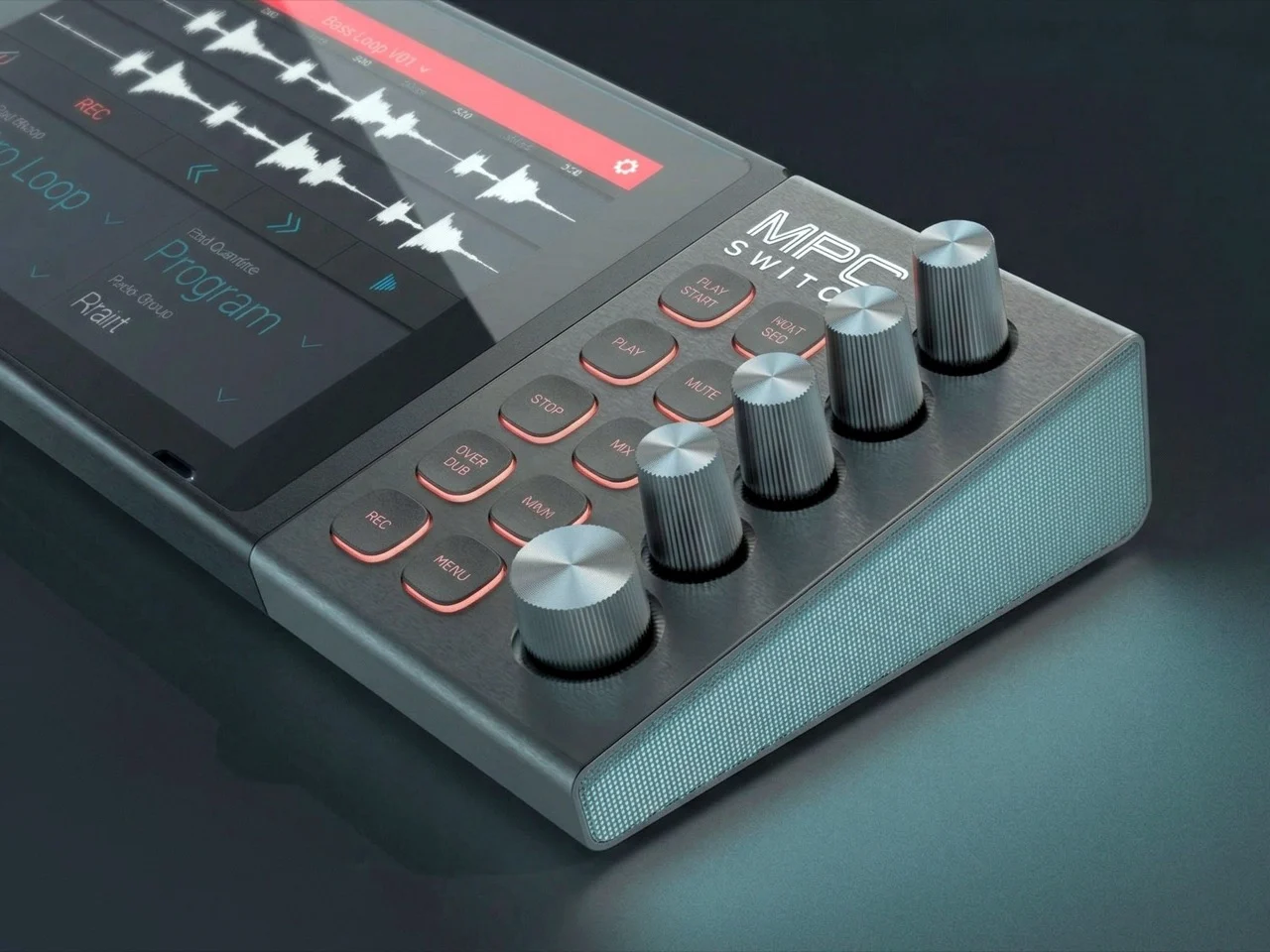
The Akai MPC Switch concept taps directly into that growing demand by imagining a hybrid device that merges the legendary Akai MPC workflow with the portability of a handheld gaming console. Inspired by the modular design of the Nintendo Switch, the Akai MPC Switch transforms portable gaming hardware into a futuristic mobile music production workstation.
While the Akai MPC Switch is currently a concept rather than an officially released commercial product, it has already generated massive excitement among producers, beatmakers, DJs, and electronic musicians because of how naturally the idea fits modern music creation trends.
The concept combines:
- MPC-style drum pads
- Portable touchscreen production
- Live beat creation
- MIDI connectivity
- Modular controls
- Portable sampling workflows
into a compact handheld setup that looks unlike anything currently available in the music production industry.
In this detailed Akai MPC Switch review, we explore the concept design, workflow possibilities, portability advantages, music production features, community reactions, and why many producers believe this could become one of the most exciting portable beatmaking devices ever created.

Akai MPC Switch Specifications (Concept)
| Feature | Details |
|---|---|
| Product Type | Portable MPC-Style Music Production Console |
| Design Inspiration | Nintendo Switch Hybrid Console |
| Control Layout | MPC Pads + Rotary Controls |
| Interface | Touchscreen Music Production UI |
| Connectivity | MIDI I/O, USB-C |
| Workflow | Sampling, Sequencing, Beatmaking |
| Portability | Handheld Mobile Production |
| Software Concept | Portable DAW Environment |
| Use Case | Beat Production, DJing, Live Performance |
| Design Style | Modular Controller System |
A Revolutionary Idea for Portable Music Production
The core appeal of the Akai MPC Switch comes from its simplicity.
Many modern music production systems still rely heavily on:
- Laptops
- External MIDI controllers
- Audio interfaces
- Large studio setups
- Multiple cables
The Akai MPC Switch concept attempts to eliminate much of that complexity by creating a fully portable production environment.
The idea is brilliantly straightforward:
- Attach MPC-style controllers to a handheld touchscreen device
- Launch a dedicated music production interface
- Create beats anywhere
This transforms portable hardware into a mobile studio capable of:
- Sampling
- Sequencing
- Live looping
- Finger drumming
- DJ-style performances
- Portable arrangement workflows
The concept instantly resonates with producers because modern beatmaking increasingly values speed and flexibility.
MPC Heritage Meets Modern Portability
The Akai MPC series remains one of the most influential music production platforms ever created.
Since the original MPC60 launched in 1988, MPC devices have shaped the sound of:
- Hip-hop
- Electronic music
- Trap
- Lo-fi
- House music
- Experimental production
Legendary producers helped turn the MPC into an iconic tool because of its:
- Responsive drum pads
- Sampling workflow
- Swing timing
- Hands-on beat creation
Over time, Akai evolved the MPC platform into standalone production systems like:
- MPC Live
- MPC One
- MPC Key
- MPC XL
These devices increasingly blurred the line between hardware and software production.
The Akai MPC Switch concept pushes that evolution even further by imagining what a truly portable MPC ecosystem could look like.
Modular Controller Design Looks Incredible
One of the most visually impressive aspects of the Akai MPC Switch concept is its modular controller system.
The left controller module includes:
- MPC-style performance pads
- Transport buttons
- Beat controls
Meanwhile, the right-side module features:
- Rotary knobs
- Additional performance controls
- Navigation buttons
- Live mixing options
The touchscreen in the center acts as the primary production interface, displaying:
- Waveforms
- Sequencers
- Mixer controls
- Sampling tools
- Clip launching
- Arrangement windows
The design feels futuristic while still remaining familiar to longtime MPC users.
Many producers immediately noticed how naturally the modular concept could improve live performance workflows.
Why Producers Love the Idea
Portable music creation continues to become more important because modern producers increasingly create music:
- While traveling
- During live performances
- In collaborative environments
- Outside traditional studios
The Akai MPC Switch concept directly supports those workflows.
Instead of carrying:
- A laptop
- MIDI controller
- Audio interface
- Headphones
- Power adapters
users could theoretically carry a single handheld production system.
This idea becomes especially attractive for:
- Hip-hop producers
- EDM artists
- Live performers
- Traveling musicians
- DJs
- Content creators
The portability factor alone makes the concept incredibly appealing.
Touchscreen Workflow Could Change Beatmaking
Touchscreen music production has improved dramatically over the past decade.
Modern tablets and portable devices are already capable of:
- Multi-touch editing
- Sample slicing
- Virtual mixing
- Gesture-based controls
The Akai MPC Switch concept combines touchscreen production with physical MPC hardware controls.
This hybrid workflow could offer:
- Faster beat creation
- More tactile feedback
- Better live performance control
- Improved portability
- More intuitive sequencing
Many producers still prefer physical drum pads because they create a more expressive and musical experience compared to touchscreen-only workflows.
The Akai MPC Switch concept cleverly combines both worlds.
Could Portable DAWs Replace Traditional Studios?
One reason the Akai MPC Switch concept has generated so much discussion is because it represents a larger industry shift.
Modern portable hardware is becoming powerful enough to handle:
- Music production
- Video editing
- 3D rendering
- Streaming
- AI-assisted creativity
As portable processors improve, many creators are beginning to question whether large desktop setups will remain necessary for all workflows.
The Akai MPC Switch concept symbolizes that transition toward:
- Mobile creativity
- Modular workflows
- Lightweight production setups
- Portable creative ecosystems
This aligns perfectly with the growing creator economy.
Community Reactions and Producer Excitement
Online reactions to the Akai MPC Switch concept have been overwhelmingly positive.
Many producers described the concept as:
- “Genius”
- “The future of portable beatmaking”
- “A dream device”
- “An instant buy”
Music production communities especially appreciated how naturally the MPC workflow fits portable gaming hardware design.
Some users also pointed out that current tablets and laptops already provide similar functionality. However, many producers still prefer dedicated hardware because:
- Physical pads feel better
- Hardware workflows reduce distractions
- Portable controllers improve creativity
- Dedicated systems feel more immersive
This emotional connection to hardware remains one of the MPC platform’s biggest strengths.
Challenges the Akai MPC Switch Would Face
Despite the excitement surrounding the concept, several real-world challenges would need to be solved for such a device to become commercially viable.
Potential concerns include:
- Battery life during production sessions
- Heat management
- Audio latency
- Software optimization
- Storage limitations
- Pricing
Professional music production requires extremely stable performance, especially during live shows.
Portable hardware would also need:
- Low-latency audio processing
- Fast sampling workflows
- Reliable MIDI synchronization
- Professional-grade software stability
These technical requirements could make development difficult.
How It Compares to Existing MPC Hardware
Current Akai MPC systems like the MPC Live III and MPC XL already provide highly advanced standalone workflows.
However, they are still larger and less portable than the MPC Switch concept.
The concept differentiates itself through:
- Handheld portability
- Modular controls
- Gaming-console-inspired design
- Ultra-mobile workflow
- Casual creative accessibility
This could potentially attract:
- Younger creators
- Beginner producers
- Mobile-first musicians
- Portable content creators
Pros and Cons
Pros
- Extremely innovative concept
- Portable music production workflow
- MPC-style tactile beatmaking
- Touchscreen integration
- Ideal for travel and live performance
- Compact modular design
- Strong appeal for producers and DJs
- Combines gaming-style portability with professional creativity
Cons
- Currently only a concept
- Real-world hardware limitations remain unknown
- Battery life concerns
- Professional audio optimization could be challenging
- May require expensive hardware components
Who Would Love the Akai MPC Switch?
The Akai MPC Switch concept is especially appealing for:
- Beatmakers
- Hip-hop producers
- Electronic musicians
- DJs
- Traveling creators
- Mobile-first producers
- Content creators
- Experimental musicians
It could also become attractive for younger producers who prefer portable creative tools over traditional studio environments.
Final Verdict
The Akai MPC Switch may still be a concept, but it represents one of the most exciting visions for the future of portable music production.
By merging:
- MPC-style beatmaking
- Handheld portability
- Touchscreen workflows
- Modular hardware controls
- Live performance flexibility
the concept creates a futuristic production device that feels both innovative and surprisingly practical.
The growing excitement surrounding the Akai MPC Switch highlights a major trend in the music industry: creators increasingly want powerful tools that allow them to make music anywhere.
If a device like this ever becomes reality, it could dramatically reshape how portable beatmaking and live music production evolve over the next decade.
If you enjoyed this article, don’t miss our previous posts packed with tech insights and reviews—check them out on our website!