The smartwatch market has become crowded with devices that all look and function similarly. Most modern wearables focus heavily on fitness tracking, health sensors, and sleek minimalist designs. The NASA Artemis Watch 2.0 takes a completely different direction.
Instead of trying to compete directly with mainstream smartwatches, the NASA Artemis Watch 2.0 embraces a bold retro-futuristic identity inspired by space exploration, engineering culture, and open-source hardware. Designed by CircuitMess, this unusual wearable combines programmable functionality, transparent industrial aesthetics, and NASA-inspired design language into one of the most distinctive gadgets released in 2026.
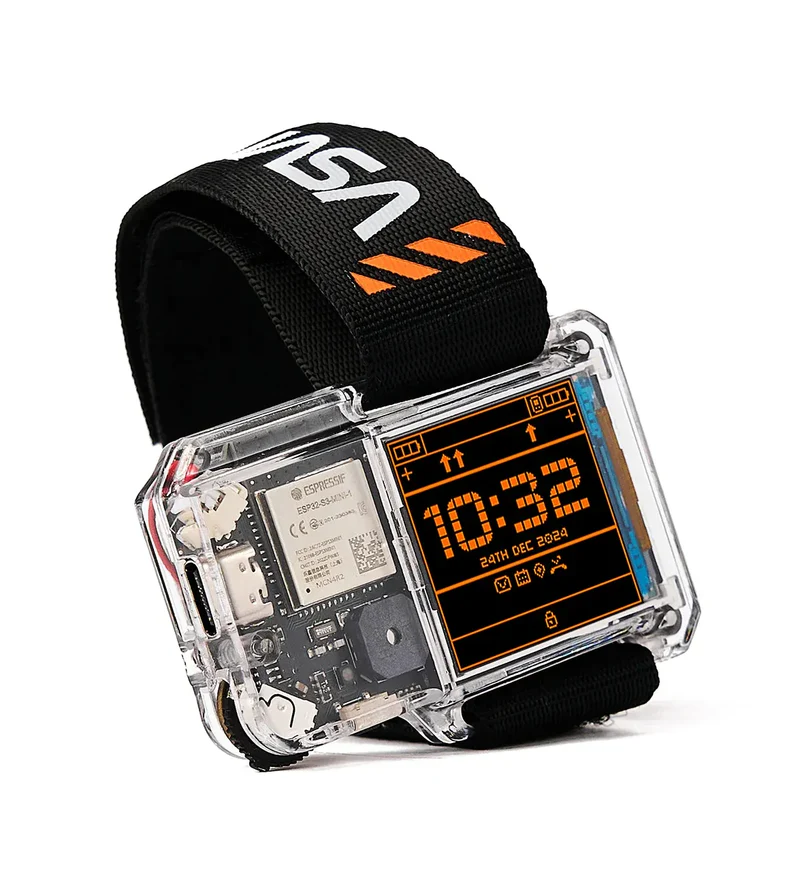
At first glance, the watch immediately stands out because it looks more like a wearable computer from a sci-fi movie than a traditional smartwatch. Many tech enthusiasts have compared it to the iconic Pip-Boy device from the Fallout game franchise thanks to its exposed internals, chunky rectangular design, and retro digital interface.
However, beneath the nostalgic styling lies a fully functional programmable smartwatch capable of activity tracking, notifications, app customization, and hardware-level modifications.
In this detailed NASA Artemis Watch 2.0 review, we explore the design, software, hardware, customization features, battery life, real-world usability, and why this device may become one of the most interesting niche smartwatches for developers, makers, and space fans.

NASA Artemis Watch 2.0 Specifications
| Feature | Details |
|---|---|
| Processor | ESP32-S3 Module |
| Display | 1.44-inch Monochrome Display |
| Connectivity | Bluetooth 5.0, Wi-Fi |
| Sensors | Accelerometer, Gyroscope, Temperature Sensor, Compass |
| Battery | 600mAh |
| Charging | USB-C |
| Software | Open-Source Firmware |
| Compatibility | Android and iPhone |
| Special Features | Programmable Apps & Watch Faces |
| Design | Transparent Retro-Futuristic Body |
| Price | Around $129 |
A Smartwatch That Looks Like a Sci-Fi Gadget
The biggest reason the NASA Artemis Watch 2.0 is generating attention online is its design.
Unlike conventional smartwatches that prioritize slim metallic bodies and curved AMOLED displays, this watch intentionally embraces a rugged cyberpunk-inspired appearance. The transparent plastic shell exposes the internal motherboard, instantly giving the device a hacker-style aesthetic rarely seen in consumer electronics.
The rectangular body combined with orange accents creates a visual style strongly associated with:
- Space mission hardware
- Retro NASA equipment
- Cyberpunk gadgets
- DIY engineering kits
- Vintage sci-fi interfaces
For many buyers, the watch’s appearance alone becomes its biggest selling point.
The interface itself also reinforces the retro-futuristic theme. The monochrome display and pixel-style UI resemble classic space computers and old-school portable terminals rather than modern polished smartwatch software.
This creates a completely different emotional experience compared to traditional wearables.
Instead of feeling like a luxury fitness accessory, the Artemis Watch 2.0 feels more like a wearable developer toolkit or miniature spacecraft console.
Open-Source Philosophy Changes Everything
What truly separates the NASA Artemis Watch 2.0 from mainstream smartwatches is its open-source nature.
Most smartwatch ecosystems today are highly restricted. Users are limited to approved apps, locked firmware, and tightly controlled interfaces.
The Artemis Watch 2.0 takes the opposite approach.
Users can:
- Customize firmware
- Build apps
- Create watch faces
- Access sensor data
- Modify system behavior
- Experiment with hardware-level programming
This flexibility makes the device especially appealing for:
- Developers
- Students
- Engineers
- STEM learners
- DIY hardware enthusiasts
- Makers and hobbyists
The watch essentially functions as both a wearable gadget and a programmable learning platform.
For users interested in coding and electronics, the Artemis Watch 2.0 offers a far more interactive experience than standard consumer smartwatches.
Hardware and Performance
The NASA Artemis Watch 2.0 is powered by the ESP32-S3 microcontroller, a chip widely respected in the maker and IoT community.
While this hardware is not designed to compete with flagship smartwatch processors from Apple or Samsung, it is highly efficient for embedded systems and programmable projects.
The watch includes:
- Bluetooth connectivity
- Wi-Fi support
- Motion tracking sensors
- Gyroscope
- Accelerometer
- Temperature sensor
- Compass
This allows the device to handle:
- Activity tracking
- Notification syncing
- Motion-based apps
- Experimental projects
- Sensor-based programming
One important thing to understand is that the Artemis Watch 2.0 is not trying to replace premium health-focused wearables.
Notably absent are:
- Heart-rate sensors
- SpO2 monitoring
- ECG functionality
- Advanced sleep tracking
Instead, the watch prioritizes programmability and experimentation over medical-grade fitness features.
Display Experience and Retro Interface
The monochrome display may initially seem outdated compared to vibrant AMOLED smartwatch panels, but it perfectly matches the watch’s identity.
The screen delivers:
- Sharp visibility
- Excellent contrast
- Strong readability
- Retro terminal aesthetics
The UI intentionally resembles old mission-control displays and vintage sci-fi computers, which enhances the overall NASA-inspired atmosphere.
Because the display is relatively simple, battery efficiency also improves significantly.
The lower power consumption aligns well with the watch’s maker-focused design philosophy.
Battery Life and USB-C Convenience
The NASA Artemis Watch 2.0 includes a 600mAh battery, which is relatively large for this type of device.
Since the watch uses a monochrome display and lightweight firmware, battery life can outperform many traditional smartwatches depending on usage patterns.
USB-C charging is another welcome addition because it eliminates the need for proprietary charging systems.
For developers and makers, the USB-C port also allows:
- Direct programming
- Data transfer
- Firmware flashing
- Easier debugging
This practical approach fits perfectly with the watch’s open-source identity.
Real-World Usability
In everyday usage, the NASA Artemis Watch 2.0 feels very different from mainstream smartwatches.
This is not a polished luxury wearable designed for corporate professionals or fitness-focused consumers.
Instead, it feels more like:
- A wearable computer
- A hacker gadget
- A programmable science toy
- A retro-tech collector’s item
Users can receive smartphone notifications through Bluetooth pairing with Android and iPhone devices.
Activity tracking functions are available through the onboard sensors, although fitness tracking remains relatively basic compared to dedicated health wearables.
The experience becomes significantly more rewarding for users who enjoy customization and experimentation.
Community Reactions and Enthusiast Feedback
Online reactions to the Artemis Watch 2.0 have been especially strong among maker communities and retro-tech enthusiasts.
Many users praised:
- The transparent design
- Open-source firmware
- Privacy-friendly ecosystem
- DIY potential
Some users described it as one of the coolest wearable gadgets released recently because it avoids the repetitive design trends dominating the smartwatch market.
However, community feedback also highlights concerns regarding:
- Wearability comfort
- Large physical size
- Sharp edges
- Premium pricing for niche hardware
These discussions reinforce the idea that the Artemis Watch 2.0 is designed more for enthusiasts than casual smartwatch buyers.
NASA Inspiration and Space Culture Appeal
The timing of the watch’s release alongside growing excitement around NASA’s Artemis missions significantly strengthens its appeal among space enthusiasts.
The Artemis missions represent humanity’s renewed push toward lunar exploration and eventual deep-space missions.
Because of this, space-themed gadgets are becoming increasingly popular among:
- Science enthusiasts
- STEM students
- Engineers
- Collectors
- Retro-futurism fans
The watch successfully taps into that cultural excitement by blending:
- NASA-inspired aesthetics
- Open-source engineering
- Retro computing culture
- Space exploration themes
Pros and Cons
Pros
- Unique retro-futuristic design
- Open-source firmware
- Fully programmable platform
- USB-C charging and data transfer
- Excellent for STEM learning
- Strong customization potential
- Transparent cyberpunk aesthetic
- Compatible with Android and iPhone
Cons
- No heart-rate or SpO2 tracking
- Bulky design may not suit everyone
- Limited mainstream smartwatch features
- Niche appeal
- Comfort may vary during long wear sessions
Who Should Buy the NASA Artemis Watch 2.0?
The NASA Artemis Watch 2.0 is ideal for users who love:
- Space exploration culture
- Retro technology
- DIY electronics
- Coding projects
- Cyberpunk aesthetics
- Open-source devices
It is especially appealing for:
- Developers
- Engineering students
- Makers
- Programmers
- Tech collectors
- STEM educators
However, users seeking:
- Advanced fitness tracking
- Premium smartwatch polish
- Luxury wearable design
- Medical-grade health monitoring
may still prefer traditional smartwatches from larger brands.
Final Verdict
The NASA Artemis Watch 2.0 is one of the most unconventional smartwatches released in recent years.
Instead of competing directly with mainstream wearables, it embraces its identity as a programmable retro-futuristic gadget inspired by space exploration and hacker culture.
Its transparent design, open-source firmware, customizable software, and STEM-friendly approach make it far more than just another smartwatch.
While it may not satisfy buyers looking for advanced health tracking or luxury smartwatch refinement, it succeeds brilliantly as:
- A maker device
- A wearable coding platform
- A retro-tech collectible
- A space-themed gadget for enthusiasts
For developers, tinkerers, and NASA fans, the Artemis Watch 2.0 may easily become one of the most exciting niche tech gadgets of 2026.
If you enjoyed this article, don’t miss our previous posts packed with tech insights and reviews—check them out on our website!