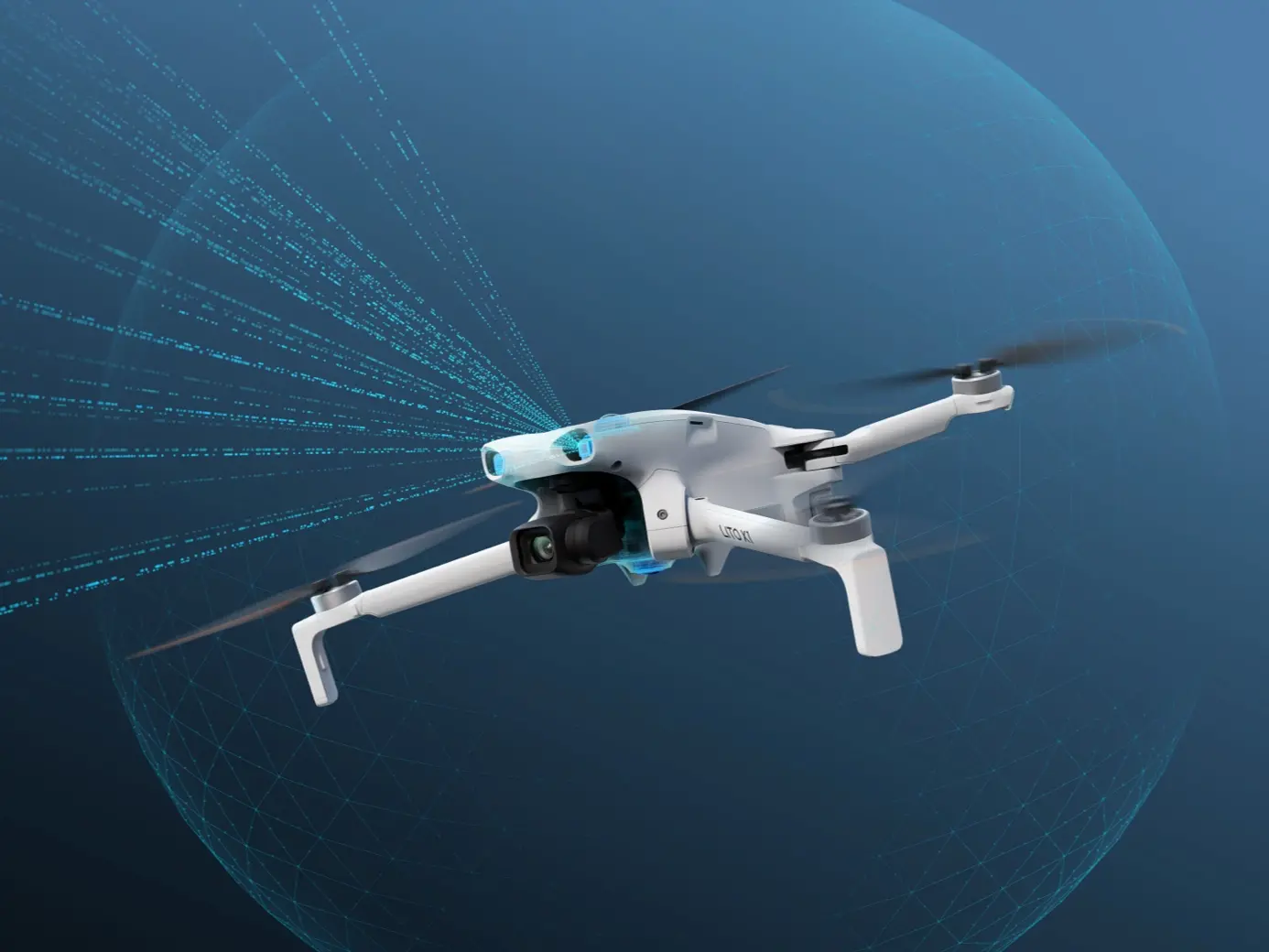
The DJI Mini 6 Drone could become one of the most exciting compact camera drones of the next generation. DJI’s Mini lineup has already established a strong reputation for combining portability with advanced aerial photography, and the next-generation model could push that formula even further.
There is one important point to clarify, though: DJI has not officially announced the Mini 6 with a final specification sheet. As a result, specifications currently discussed online should be treated as rumors or expectations rather than confirmed features.
Even so, the potential upgrade path is exciting. A better camera, smarter tracking, improved obstacle sensing, longer endurance, faster transmission, and more intelligent flight assistance could make the DJI Mini 6 a compelling choice for travelers, photographers, vloggers, and professional content creators.
DJI Mini 6 Drone at a Glance
| Feature | Expected Direction |
|---|---|
| Product Category | Compact camera drone |
| Design | Foldable |
| Weight | Potentially around the sub-250g category |
| Camera | Next-generation high-resolution sensor rumored |
| Video | Advanced 4K; 6K rumored |
| Gimbal | 3-axis stabilization expected |
| Obstacle Avoidance | Improved sensing rumored |
| Tracking | AI-assisted subject tracking expected |
| Transmission | Next-generation system expected |
| Flight Time | Longer endurance expected |
| Battery | Improved energy density rumored |
| Storage | Internal and external storage expected |
| Target Users | Travelers, creators, photographers |
| Official Status | Not officially announced |
Note: These are expected or rumored features and should not be considered official DJI specifications.
Why the DJI Mini 6 Is So Interesting
The Mini series has always focused on one simple idea: put a capable camera drone into a remarkably compact body.
That philosophy makes the Mini lineup particularly attractive to people who don’t want to carry a large professional drone.
A compact drone can fit alongside:
- A camera
- Laptop
- Travel accessories
- Clothing
- Extra batteries
- Everyday gear
For travelers, portability can be just as important as camera quality.
The DJI Mini 6 could build on this formula with better imaging, smarter flight technology, and improved endurance.
A Compact and Foldable Design
The DJI Mini 6 is expected to retain the foldable design that has become synonymous with DJI’s Mini family.
The arms can fold inward, reducing the drone’s overall footprint during transportation.
This is particularly useful for travel.
A large professional drone often requires a dedicated backpack or protective case. A compact Mini-series drone can potentially fit into a much smaller space.
That makes it easier to take the drone on:
- Vacations
- Hiking trips
- Road trips
- Camping adventures
- Photography assignments
- Outdoor activities
For many users, this convenience is the biggest reason to choose a Mini-series drone.
The 250-Gram Challenge
Weight could be one of the biggest engineering challenges for DJI.
The Mini family has traditionally focused heavily on the sub-250g category, which can offer regulatory benefits in certain regions.
However, being lightweight doesn’t mean pilots can ignore local drone regulations.
Depending on where you fly, registration, remote identification, airspace restrictions, pilot requirements, and operational rules may still apply.
For DJI, maintaining a lightweight design while adding more technology is difficult.
Every upgrade adds weight.
A larger sensor adds weight.
More obstacle sensors add weight.
A larger battery adds weight.
A more sophisticated gimbal adds weight.
That makes the Mini 6 an interesting engineering challenge.
Camera Could Be the Biggest Upgrade
The camera will likely be one of the most important improvements.
Rumors surrounding the next-generation Mini platform have suggested the possibility of a larger sensor, with some speculation pointing toward a 1-inch-class stacked sensor.
However, this remains unconfirmed.
A larger sensor could potentially improve:
- Dynamic range
- Low-light performance
- Image detail
- Noise control
- Highlight preservation
- Shadow detail
- Overall video quality
The challenge is fitting a larger camera system into an extremely lightweight aircraft.
The sensor isn’t the only component involved.
The camera also requires a lens, processor, gimbal, cooling, and supporting electronics.
Could DJI Mini 6 Record 6K Video?
One of the most interesting rumors surrounding the DJI Mini 6 is the possibility of 6K video recording.
There is no official confirmation yet, but higher-resolution recording could provide creators with additional flexibility.
For example, 6K footage could allow editors to:
- Crop footage
- Reframe shots
- Stabilize video digitally
- Create 4K exports
- Produce vertical content
- Extract high-resolution still frames
However, higher resolution also requires more storage, processing power, and battery energy.
For many users, excellent 4K video may ultimately be more useful than a limited 6K mode.
Better Low-Light Photography
Low-light aerial photography has traditionally been challenging for compact drones.
Small sensors can struggle when there isn’t enough light.
The results can include:
- Visible noise
- Reduced detail
- Weak dynamic range
- Blurred movement
- Loss of color information
A larger sensor combined with better image processing could improve the Mini 6’s performance during:
- Sunset
- Sunrise
- Blue hour
- City photography
- Evening landscapes
This could make the drone considerably more useful for cinematic creators.
Computational Photography Could Improve Images
Camera hardware is only part of the equation.
The image processor and software are equally important.
A modern drone can use computational photography to combine multiple frames and intelligently process the result.
Potential improvements could include:
- HDR
- Noise reduction
- Sharper details
- Improved color
- Better exposure
- Enhanced nighttime photography
- More natural skin tones
- Intelligent scene recognition
AI could play an increasingly important role in this process.
Smarter AI Subject Tracking
Subject tracking is another area where the DJI Mini 6 could become more capable.
A future Mini drone could potentially track:
- People
- Cars
- Cyclists
- Boats
- Animals
- Athletes
The difficult part isn’t simply recognizing a subject.
The drone must predict where the subject is going while avoiding obstacles.
Trees, buildings, poles, crowds, and changing lighting conditions can make autonomous tracking difficult.
Smarter AI could allow the drone to anticipate movement instead of simply responding to the subject’s current location.
AI-Powered Flight Assistance
Artificial intelligence could also improve other aspects of drone operation.
Potential applications include:
- Intelligent route planning
- Automated camera framing
- Smart flight paths
- Scene recognition
- Improved obstacle awareness
- Automated subject positioning
- Better return-to-home decisions
This doesn’t mean the drone would eliminate the need for a pilot.
Instead, AI could handle some of the complicated decisions while the user concentrates on composition.
That would make advanced aerial photography more accessible to beginners.
Improved Obstacle Avoidance
Obstacle avoidance is particularly important for autonomous flight.
A drone moving quickly needs to understand what is around it.
That becomes difficult in environments such as:
- Forests
- Urban areas
- Narrow paths
- Crowded spaces
- Low-light conditions
A future Mini 6 could potentially use more sophisticated sensing and processing to improve obstacle detection.
However, obstacle avoidance should never be considered a guarantee against collisions.
Pilots remain responsible for operating the aircraft safely.
Night Flight Capabilities
Low-light sensing could become another area of improvement.
Flying in darkness presents additional challenges because visual systems have less information available.
Better sensors and algorithms could help the drone understand its surroundings more effectively.
Nevertheless, improved hardware does not automatically mean unrestricted nighttime operation.
Pilots should always follow the aviation rules applicable to their location.
Flight Time
Battery endurance is another major topic surrounding the Mini 6.
Some online rumors have suggested extremely long flight times, but such claims should be viewed cautiously.
A lightweight drone has limited energy capacity.
Adding a much larger battery increases weight, which can cancel some of the benefits.
A realistic improvement would likely involve a combination of:
- More efficient motors
- Better propellers
- Improved flight algorithms
- Higher-density batteries
- More efficient processors
Even an additional five or ten minutes of practical flight time could make a significant difference.
Battery Technology Could Make the Difference
Future battery technology could allow DJI to improve endurance without making the drone substantially heavier.
Higher energy density means more usable energy can potentially be stored in a smaller package.
But the battery also needs to remain:
- Safe
- Lightweight
- Stable
- Reliable
- Thermally efficient
A drone battery has to deliver significant power during acceleration and high-wind flight, so capacity isn’t the only consideration.
Wind Resistance
Small drones are naturally more sensitive to strong winds than larger aircraft.
The Mini 6 could potentially improve its wind handling through:
- More efficient motors
- Improved propeller design
- Better stabilization
- More responsive flight algorithms
- Improved wind compensation
A lightweight drone can perform surprisingly well in moderate wind, but physics still matters.
No compact drone should be treated as suitable for severe weather.
Transmission Reliability
A strong communication link between the drone and controller is essential.
An improved transmission system could potentially provide:
- Lower latency
- Better live video
- Greater connection stability
- Improved range
- Better performance in congested areas
For professional creators, reliability can be more important than maximum theoretical range.
A stable connection gives the pilot greater confidence when capturing important footage.
Vertical Video
Vertical content has become increasingly important.
For creators producing short-form videos, the ability to capture footage optimized for vertical viewing is extremely useful.
A future Mini 6 could continue improving vertical shooting capabilities.
This could help creators produce content for:
- Short-form video
- Social media
- Mobile-first platforms
- Vertical advertisements
- Travel reels
The advantage of native vertical shooting is that it can preserve more usable resolution than simply cropping a landscape image.
Three-Axis Gimbal Stabilization
A three-axis gimbal is expected to remain a key part of the Mini 6 camera system.
Drones constantly experience small movements caused by:
- Wind
- Motor corrections
- Acceleration
- Direction changes
Without stabilization, footage can become shaky.
A gimbal compensates for these movements and allows the camera to remain stable.
Good stabilization is especially important for:
- Cinematic shots
- Tracking
- Sunrise photography
- Sunset footage
- Long camera movements
- Windy conditions
DJI Mini 6 for Travel
Travel is arguably the perfect environment for a compact drone.
The combination of portability and aerial imaging makes it possible to capture perspectives that cannot be achieved from the ground.
Mountains become more dramatic.
Coastlines reveal their shape.
Roads create leading lines.
Buildings become geometric patterns.
Forests reveal their scale.
For travelers, a compact drone can become one of the most useful pieces of creative equipment in a camera bag.
DJI Mini 6 for Content Creators
Content creators can benefit significantly from aerial footage.
Aerial establishing shots can instantly add production value to a video.
For example, a travel video could begin with a wide shot of an entire destination.
A real-estate creator could reveal a property and its surrounding neighborhood.
A cycling channel could follow a rider along a scenic road.
A hiking video could transition from a close-up trail shot to a wide mountain view.
The Mini 6 could make these cinematic shots accessible without requiring a large professional drone.
DJI Mini 6 for Photography
Aerial photography requires a different approach to composition.
From the sky, photographers can explore:
- Symmetry
- Patterns
- Shadows
- Geometry
- Leading lines
- Scale
- Perspective
A high-quality camera would make the Mini 6 even more attractive to photographers.
RAW photography would also remain important for anyone who wants extensive control over exposure, color, and dynamic range during post-processing.
DJI Mini 6 for Beginners
The Mini 6 could also be appealing to first-time drone users.
Automated flight features can help beginners capture attractive footage without immediately mastering every manual control.
Potential assistance features include:
- Automated subject tracking
- Intelligent flight paths
- Return-to-home
- Obstacle alerts
- Assisted landing
- Cinematic flight modes
However, automation should never replace basic pilot training.
New drone owners should understand their aircraft, practice in open areas, and learn the relevant regulations before attempting complex flights.
Expected DJI Mini 6 Specifications
Because DJI has not officially announced the Mini 6, these should be considered expected specifications rather than confirmed specifications.
| Feature | Expected |
|---|---|
| Design | Foldable compact drone |
| Weight | Potentially around the sub-250g category |
| Camera | Larger next-generation sensor rumored |
| Video | Advanced 4K; 6K rumored |
| Stabilization | 3-axis gimbal |
| Obstacle Avoidance | Improved sensing expected |
| Tracking | AI-assisted tracking |
| Transmission | Next-generation system expected |
| Battery | Improved energy density |
| Flight Time | Longer endurance expected |
| Vertical Shooting | Expected |
| Storage | Internal/external options |
| Target Audience | Travelers, photographers, creators |
| Official Launch | Not confirmed |
DJI Mini 6 Pros and Cons
Pros
- Compact and portable design
- Foldable construction
- Potentially excellent camera
- Advanced AI tracking
- Improved obstacle detection
- Better low-light performance possible
- High-resolution video rumored
- Potentially longer flight time
- Strong travel appeal
- Excellent option for content creators
- Suitable for aerial photography
- Could remain lightweight
Cons
- Official specifications are not confirmed
- Launch date remains uncertain
- Some online specifications may be exaggerated
- Larger camera hardware could increase weight
- Longer flight times are difficult to achieve in a lightweight drone
- Advanced features could increase the price
- Local drone regulations still apply
DJI Mini 6 vs Previous Mini Models
The biggest question for existing DJI users will be whether the Mini 6 represents a meaningful upgrade.
Previous Mini models already provide impressive camera quality and intelligent flight capabilities.
Therefore, DJI will need to improve multiple areas to justify the next generation.
Potential improvements include:
| Feature | Current Direction | Mini 6 Potential |
|---|---|---|
| Camera | High-quality compact sensor | Larger/new-generation sensor rumored |
| Video | Advanced 4K | 6K rumored |
| Tracking | Intelligent | More advanced AI |
| Obstacle Sensing | Advanced | Improved sensing |
| Transmission | High-quality digital link | Next-generation system |
| Battery | Strong endurance | Improved efficiency |
| Design | Foldable | Further refinement |
| Portability | Excellent | Lightweight target maintained |
When Could the DJI Mini 6 Launch?
The launch date remains uncertain because DJI has not officially announced the Mini 6.
A future release could arrive toward the end of 2026 or sometime in 2027, depending on DJI’s development schedule.
However, buyers should avoid making purchasing decisions solely around an unconfirmed release window.
Rumors can change quickly, particularly when a product is still months away from an official announcement.
Should You Wait for the DJI Mini 6?
If you already own a capable Mini-series drone, waiting could make sense.
You can continue using your existing aircraft while watching for official information.
However, if you need a drone immediately for a:
- Vacation
- Wedding
- Photography project
- YouTube channel
- Real-estate shoot
- Outdoor adventure
then waiting for an unannounced product may not be practical.
Current DJI Mini models are already highly capable.
The Mini 6 should ultimately be judged on its real-world improvements rather than rumored specifications.
Final Verdict
The DJI Mini 6 Drone could become one of the most exciting compact camera drones of the next generation.
Its potential combination of improved camera hardware, AI-powered tracking, better obstacle awareness, longer endurance, advanced video capabilities, and compact construction makes it an intriguing product for both enthusiasts and professional creators.
However, it is important to separate confirmed information from speculation.
DJI has not yet officially announced the Mini 6 or provided a final specification sheet. Therefore, claims surrounding features such as a 1-inch stacked sensor, 6K video, extremely long flight times, advanced LiDAR, or next-generation transmission should be treated as rumors until DJI confirms them.
The real challenge for DJI will be balancing performance with portability.
A larger sensor is desirable.
A larger battery is desirable.
More sensors are desirable.
More powerful processors are desirable.
But all of these components add weight.
The Mini series succeeds because it remains compact.
If DJI can deliver meaningful improvements while preserving that portability, the Mini 6 could be an exceptional travel and content-creation drone.
For photographers, travelers, vloggers, and aerial enthusiasts, that combination could make the DJI Mini 6 one of the most desirable lightweight drones on the market.
For now, though, the best approach is to remain cautious about specific specifications and wait for official confirmation.
TechWider Rating: 9.2/10 — Expected
If you enjoyed this article, don’t miss our previous posts packed with tech insights and reviews—check them out on our website!


