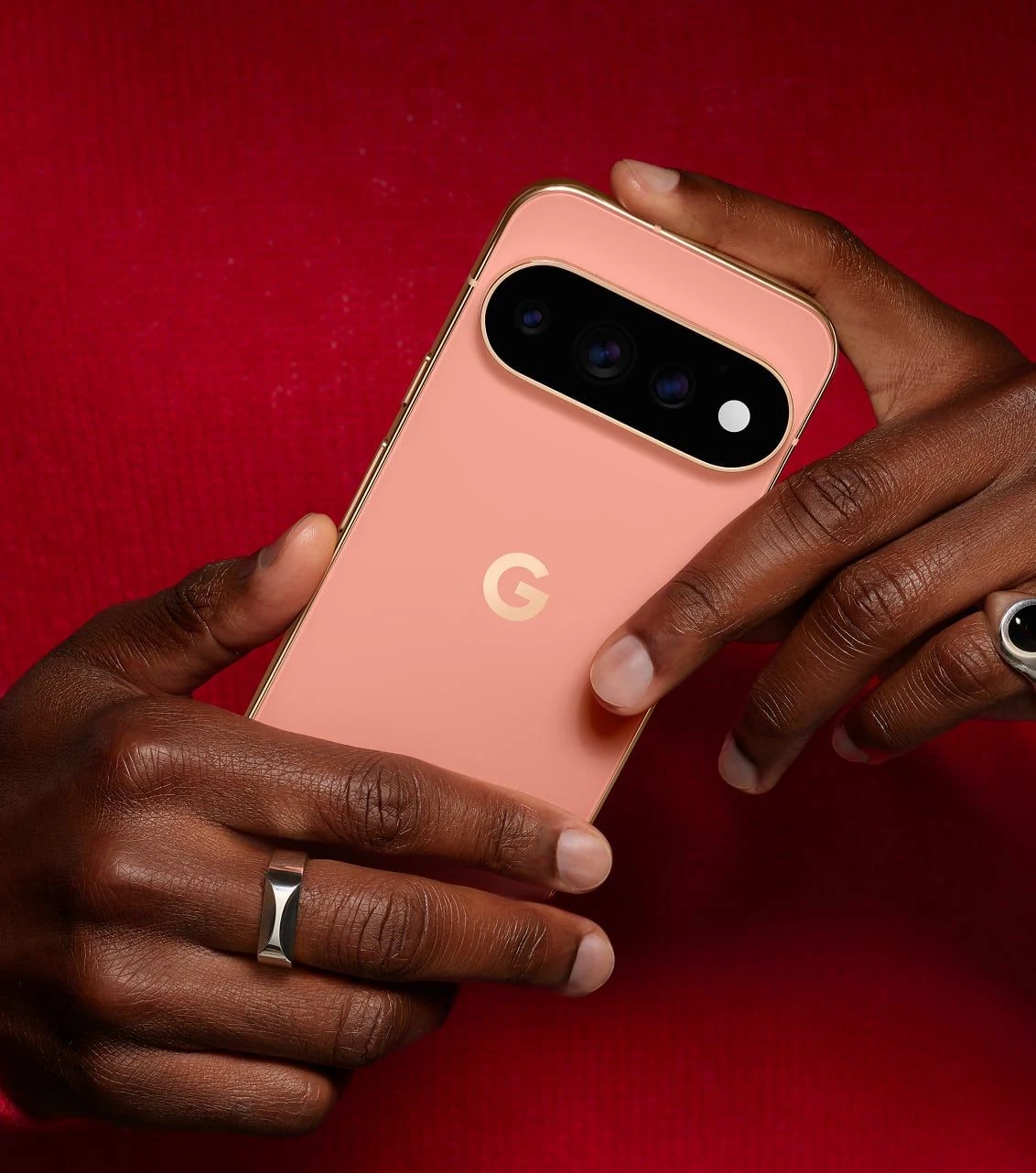
The Google Pixel 11 Series represents Google’s latest attempt to redefine what a modern flagship smartphone can do. Instead of competing only on processor speed, camera megapixels, or display specifications, Google continues to build the Pixel around a combination of intelligent software, computational photography, clean Android integration, and increasingly powerful AI capabilities.
The Pixel 11 family is designed to serve different types of users. The standard Google Pixel 11 targets everyday flagship buyers, while the Pixel 11 Pro and Pixel 11 Pro XL focus more heavily on photography, display quality, and premium performance. The Pixel 11 Pro Fold takes the same philosophy into the foldable category, combining smartphone portability with a larger tablet-style display.
What makes this generation particularly interesting is how deeply AI is integrated into the overall experience. Google’s approach is no longer simply about adding an AI chatbot to a phone. Instead, AI is becoming part of photography, communication, voice input, productivity, search, editing, and everyday assistance.
The result is a Pixel lineup that feels increasingly focused on making the smartphone more useful rather than simply more powerful.
Google Pixel 11 Series at a Glance
The Pixel 11 lineup is designed around four primary models:
| Model | Best For | Display | Key Highlight |
|---|---|---|---|
| Pixel 11 | Everyday flagship users | 6.3-inch OLED | Balanced performance and AI |
| Pixel 11 Pro | Photography enthusiasts | 6.3-inch LTPO OLED | Advanced camera system |
| Pixel 11 Pro XL | Large-screen users | 6.8-inch LTPO OLED | Large display and battery |
| Pixel 11 Pro Fold | Foldable enthusiasts | 8-inch internal OLED | Phone-to-tablet versatility |
All four models are built around Google’s Tensor G6 platform, while the Pro versions receive more advanced display and camera hardware.
A Refined Pixel Design
Google continues to evolve its recognizable Pixel design instead of completely abandoning the aesthetic that has become associated with the series.
The distinctive camera bar remains one of the most recognizable elements on the back of the phone, while the overall construction continues to emphasize a premium appearance.
The Pixel 11 generation focuses on making that camera housing more streamlined.
The result is a cleaner profile that feels less dominated by the camera system while still maintaining the distinctive Pixel identity.
The combination of glass and a metal frame gives the phone the premium construction expected from a flagship.
Durability is also important at this price level. Modern smartphones aren’t merely communication devices anymore. They serve as cameras, navigation systems, entertainment devices, workstations, gaming machines, and personal assistants.
That makes build quality an increasingly important part of the buying decision.
Pixel 11 Display: Bright and Smooth
The standard Pixel 11 features a 6.3-inch OLED display designed to balance screen size with comfortable everyday handling.
The display supports refresh rates up to 120Hz, making scrolling, animations, and compatible games noticeably smoother than traditional 60Hz panels.
OLED technology also provides the advantages associated with premium smartphone displays, including:
- Deep blacks
- Strong contrast
- Vibrant colors
- Excellent viewing angles
- Smooth animations
- High outdoor brightness
The high brightness is particularly useful when using the phone outdoors.
A display can look fantastic indoors but become difficult to read under direct sunlight. Higher brightness helps maintain visibility in those situations.
Pixel 11 Pro and Pro XL Displays
The Pro models take the display experience further with LTPO OLED technology.
The Pixel 11 Pro features a compact premium display, while the Pixel 11 Pro XL provides a much larger screen for users who prefer more viewing space.
LTPO technology allows the refresh rate to dynamically change depending on what is happening on the display.
For fast scrolling or gaming, the screen can operate at a high refresh rate.
For static content, it can reduce the refresh rate to conserve power.
This balance helps deliver both smoothness and efficiency.
The Pro XL is particularly appealing for people who spend considerable time watching movies, editing photos, browsing websites, or working from their phone.
Tensor G6 Is the Heart of Pixel 11
At the center of the Pixel 11 family is Google’s Tensor G6 processor.
Google’s Tensor strategy has always been somewhat different from the approach taken by companies that focus primarily on benchmark scores.
Instead, Tensor is designed around Google’s strengths in:
- Artificial intelligence
- Computational photography
- Voice recognition
- Image processing
- Security
- Software optimization
The Tensor G6 continues that philosophy.
It provides the processing foundation for everyday applications while also handling AI-intensive tasks that increasingly happen directly on the phone.
This makes the processor important not only for performance but also for the unique Pixel features that differentiate Google’s smartphones from competitors.
Gemini Becomes Central to the Pixel Experience
AI is arguably the biggest theme surrounding the Pixel 11 generation.
Google continues to integrate Gemini throughout the smartphone experience.
Instead of treating AI as an isolated application, the company is increasingly using it for practical tasks.
AI can assist with:
- Writing
- Summarization
- Translation
- Search
- Image editing
- Organization
- Voice interactions
- Productivity
- Communication
This approach makes the Pixel feel less like a smartphone with an AI application installed and more like a smartphone designed around intelligent software.
Proactive AI Assistance
One of the more interesting directions is Google’s focus on proactive assistance.
Traditional digital assistants generally wait for you to ask a question.
A more advanced AI system can understand context and potentially anticipate what information or action might be useful.
For example, if you’re discussing plans in a conversation, the phone could potentially help surface relevant information.
Similarly, when working with documents or messages, AI can assist with summaries, responses, or organization.
The goal is to reduce the number of steps required to complete everyday tasks.
Smarter Voice-to-Text
Voice input is also becoming increasingly important.
Modern users frequently dictate messages, notes, emails, reminders, and ideas while driving, walking, or multitasking.
Traditional speech-to-text systems often produce a rough transcript that still requires editing.
Google’s newer AI-powered approach aims to understand the structure and intent of spoken language more effectively.
That can make voice input useful for:
- Emails
- Notes
- Long messages
- Meeting summaries
- Drafts
- Social-media posts
- Personal reminders
For people who regularly dictate rather than type, improvements in speech recognition can have a significant impact on everyday usability.
Pixel 11 Camera System
Photography remains one of the strongest reasons to consider a Pixel smartphone.
The Pixel 11’s camera system is designed to cover a wide range of shooting situations.
A versatile setup allows users to move between:
- Standard photography
- Ultra-wide photography
- Telephoto photography
- Portraits
- Night photography
- Video recording
- Selfies
One of the most important developments is the inclusion of telephoto capabilities in the standard Pixel 11.
This gives everyday buyers more flexibility when photographing distant subjects.
Computational Photography Remains Google’s Strength
Google’s camera philosophy has always relied heavily on computational photography.
The camera sensor captures the initial information, but Google’s software then processes that data to create the final image.
The phone can analyze:
- Exposure
- Shadows
- Highlights
- Skin tones
- Noise
- Sharpness
- Color
- Dynamic range
The Tensor G6 processor provides the computational power needed to perform much of this processing quickly.
This is why Pixel photography can remain competitive even when competitors advertise larger camera sensors or higher megapixel counts.
Photography isn’t only about hardware.
The software pipeline matters just as much.
Improved Low-Light Photography
Night photography continues to be an important part of the Pixel experience.
Low-light environments are challenging because smartphone sensors have limited physical space.
Google compensates through computational processing.
Night photography can benefit from:
- Noise reduction
- Multi-frame processing
- Improved exposure
- Better shadow detail
- Enhanced color reproduction
- Sharper subjects
Faster image processing is also important because it allows users to capture spontaneous nighttime moments without waiting excessively for the phone to finish processing.
Pixel 11 Pro Camera System
The Pixel 11 Pro models take photography further with a more advanced camera configuration.
The Pro lineup is designed for users who want additional flexibility and higher-end imaging capabilities.
A typical Pro shooting experience provides dedicated options for:
- Wide photography
- Ultra-wide photography
- Telephoto photography
- Portraits
- Night photography
- High-zoom photography
- Professional video
The telephoto camera is particularly useful for travel, wildlife, portraits, sports, and distant subjects.
Extreme Zoom and Computational Processing
Modern smartphones increasingly advertise extremely high zoom levels.
The Pixel 11 Pro continues this trend with advanced computational zoom capabilities.
However, it’s important to understand what extreme smartphone zoom actually means.
At lower magnifications, optical and sensor information plays the largest role.
At very high magnifications, computational processing becomes increasingly important.
AI algorithms attempt to reconstruct details and produce a more usable image.
The results can be impressive in good conditions, but extreme zoom should still be viewed as a specialized capability rather than a replacement for a dedicated telephoto camera.
More Creative Photography Tools
Google is also expanding the creative side of Pixel photography.
New camera tools give users more control over the appearance and presentation of photographs.
Instead of applying generic filters after taking an image, users can experiment with different visual styles that influence the final result.
This is useful for social-media creators and photographers who want a consistent visual identity across their images.
It also makes the Pixel camera more approachable for casual users who want creative results without learning complex editing software.
Turning Video Into Photographs
Another useful concept is the ability to extract memorable still images from video footage.
This addresses a common smartphone photography problem.
Sometimes an interesting moment happens too quickly to photograph.
You start recording video instead.
Later, you may realize that one frame would make a great photograph.
AI-assisted frame selection can make it easier to recover those moments.
This makes video recording more versatile because users don’t have to make the photograph-versus-video decision quite as quickly.
Creator Tools
The Pixel 11 series is increasingly relevant to mobile creators.
Smartphones have already replaced traditional cameras for many social-media users, but capturing footage is only one part of content creation.
Editing is often the more time-consuming process.
Integrated creator tools can simplify:
- Video editing
- Image adjustments
- Content organization
- Cropping
- Formatting
- Sharing
- Short-form content creation
For bloggers, influencers, small-business owners, and casual creators, this can eliminate the need to move files between several applications before publishing content.
Video Recording
The Pro models are positioned as particularly capable video devices.
High-resolution recording combined with stabilization allows users to capture smoother footage while moving.
High-resolution video also gives creators more flexibility during editing because footage can be cropped or reframed without losing as much detail.
For travel creators, this can be especially useful.
A single smartphone can function as a camera, editing device, storage system, and publishing tool.
Battery Life
Battery life is another important consideration.
Google’s Pixel 11 lineup uses larger batteries and improved processor efficiency to provide reliable everyday endurance.
Actual battery life will vary depending on usage.
Heavy gaming, camera recording, high brightness, 5G, and continuous AI processing can consume considerably more power than light messaging and browsing.
The larger Pro XL model has an advantage for users who prioritize battery endurance because its larger body allows for a larger battery.
Faster Charging
Charging speed has become increasingly important as smartphones become more capable.
The Pixel 11 generation supports faster charging than many previous Pixel models.
That makes short charging sessions more useful.
Instead of waiting for the phone to reach 100%, users can plug it in briefly before leaving home and recover enough power for several more hours.
This is particularly helpful for people who travel frequently or use their phones heavily throughout the day.
Wireless Charging
Wireless charging remains an important premium feature.
The Pixel 11 family also moves toward newer magnetic wireless charging standards, making compatible charging accessories easier to use.
Magnetic alignment helps keep the phone properly positioned on the charging surface.
For users with a desk or bedside charging setup, this can be considerably more convenient than repeatedly connecting a cable.
Security and Privacy
Security is another area where Google places considerable emphasis.
The Pixel 11 family combines its Tensor platform with dedicated security hardware.
This helps protect sensitive information stored on the phone.
Modern smartphones contain enormous amounts of personal data, including:
- Photos
- Messages
- Emails
- Financial applications
- Passwords
- Documents
- Location information
Strong hardware and software security are therefore essential.
Software Experience
The Pixel 11 series delivers Google’s vision of Android with a strong emphasis on clean software and integrated AI.
Because Google controls both Android and Pixel hardware, it can optimize features specifically for its devices.
This is particularly valuable for AI.
The company controls the operating system, Tensor platform, camera software, and Gemini ecosystem.
That gives Google considerable freedom to build features that wouldn’t necessarily work as well on generic Android hardware.
Pixel 11 Pro Fold
The Pixel 11 Pro Fold is the most unusual member of the family.
Instead of remaining a conventional smartphone, it can unfold into a much larger display.
The external display handles normal smartphone tasks.
Open the device and the internal display provides a tablet-like workspace.
This is particularly useful for:
- Multitasking
- Reading
- Video
- Productivity
- Editing
- Gaming
- Large documents
- AI-assisted workflows
The Pro Fold effectively combines two devices into one.
Pixel 11 Pro Fold for Productivity
Foldable phones are particularly interesting for people who work from their smartphones.
You can open multiple applications side by side and work with more information simultaneously.
For example:
Email + Browser
Notes + Document
Calendar + Messaging
Video + Web Browser
This can dramatically reduce the amount of app switching required during a busy workday.
For travelers, the foldable format can also reduce the need to carry a separate tablet.
Google Pixel 11 Series Specifications
| Feature | Pixel 11 | Pixel 11 Pro | Pixel 11 Pro XL | Pixel 11 Pro Fold |
|---|---|---|---|---|
| Display | 6.3-inch OLED | 6.3-inch LTPO OLED | 6.8-inch LTPO OLED | Large foldable OLED |
| Refresh Rate | Up to 120Hz | Up to 120Hz | Up to 120Hz | Up to 120Hz |
| Processor | Tensor G6 | Tensor G6 | Tensor G6 | Tensor G6 |
| RAM | 12GB | Up to 16GB | Up to 16GB | Up to 16GB |
| Storage | 256GB+ | 256GB+ | 256GB+ | 512GB+ |
| Main Camera | Advanced wide camera | Pro triple-camera system | Pro triple-camera system | Triple-camera system |
| AI | Gemini | Gemini | Gemini | Gemini |
| Connectivity | 5G, Wi-Fi, Bluetooth | 5G, Wi-Fi, Bluetooth | 5G, Wi-Fi, Bluetooth | 5G, Wi-Fi, Bluetooth |
| Charging | Wired + wireless | Wired + wireless | Wired + wireless | Wired + wireless |
| Software | Android | Android | Android | Android |
Specifications may vary depending on model, configuration, and market.
Google Pixel 11 Series Pros and Cons
Pros
- Powerful Tensor G6 platform
- Deep AI integration
- Strong computational photography
- Bright OLED displays
- Smooth high-refresh-rate screens
- Improved camera versatility
- Advanced Pro camera systems
- Useful AI editing tools
- Strong video capabilities
- Excellent Android integration
- Modern wireless charging
- Dedicated security hardware
- Multiple models for different users
- Foldable option available
Cons
- Pro models are expensive
- AI features may not appeal to everyone
- Extreme zoom relies heavily on computational processing
- Heavy camera and AI use can affect battery life
- Tensor performance may not lead every benchmark category
- Pro Fold is considerably more expensive than conventional models
Which Google Pixel 11 Should You Buy?
Google Pixel 11
The standard Pixel 11 is the best choice for most buyers.
It delivers the core Pixel experience without pushing into the highest price category.
Google Pixel 11 Pro
The Pro model is better suited to photography enthusiasts who want advanced cameras and a premium display in a relatively manageable size.
Google Pixel 11 Pro XL
The Pro XL is designed for users who want the largest conventional Pixel display and stronger battery capacity.
It is particularly suitable for video consumption, gaming, photography, and productivity.
Google Pixel 11 Pro Fold
The Pro Fold is for buyers who want maximum versatility.
Its ability to transform from a smartphone into a tablet-like device makes it the most productivity-focused Pixel.
Who Should Buy the Pixel 11 Series?
The Pixel 11 lineup is particularly compelling for:
Photography Enthusiasts
Google’s computational photography remains one of the strongest reasons to choose a Pixel.
AI Users
If you want AI deeply integrated into your smartphone rather than limited to a separate application, the Pixel 11 is an attractive choice.
Content Creators
The combination of advanced cameras and creator tools makes the Pro models useful for mobile content production.
Android Enthusiasts
Pixel provides a clean Android experience with Google’s software philosophy at its center.
Travelers
Camera capabilities, translation, AI assistance, navigation, and battery improvements make the Pixel useful while traveling.
Power Users
The Pro XL provides the largest conventional screen and a strong combination of cameras, performance, and battery capacity.
Who Should Skip the Pixel 11?
The Pixel 11 isn’t necessarily the ideal phone for everyone.
If maximum gaming performance is your primary concern, a gaming-oriented flagship may be better suited to your needs.
Similarly, users who don’t care about AI may not appreciate how central Google’s intelligent features have become.
And if you prefer smaller, lighter phones, the Pro XL and Pro Fold could feel excessive.
For most users, however, the standard Pixel 11 provides the most balanced experience.
Final Verdict
The Google Pixel 11 Series demonstrates Google’s increasingly clear vision for the future of smartphones.
Rather than focusing exclusively on bigger specifications, Google is attempting to make the smartphone more intelligent.
The Tensor G6 processor sits at the heart of this strategy, supporting AI-powered photography, Gemini features, voice processing, security, and everyday performance.
The camera system remains one of the lineup’s biggest attractions. Google’s combination of capable hardware and sophisticated computational photography allows the Pixel 11 family to produce impressive results across a wide variety of situations.
The Pro models take that concept further with more advanced camera systems, brighter displays, and stronger zoom capabilities.
Meanwhile, new AI-powered tools make the Pixel experience more creative and practical.
Features designed for voice-to-text, image editing, video capture, content creation, and proactive assistance demonstrate that Google’s focus has moved beyond simply making a faster smartphone.
It wants the phone to understand what you’re doing and help you do it more efficiently.
The standard Pixel 11 offers the best balance for everyday users. The Pro is ideal for photography enthusiasts, while the Pro XL is aimed at people who want maximum screen space and battery capacity.
The Pro Fold takes a more ambitious approach by turning the Pixel into a phone and tablet in one device.
There are still compromises. Google’s Tensor platform isn’t necessarily the undisputed performance leader in every benchmark, and some AI features may feel unnecessary to users who prefer a more traditional smartphone experience.
Nevertheless, the Pixel 11 family represents a compelling combination of hardware, software, photography, and artificial intelligence.
For users who want a smartphone that feels increasingly personal and intelligent rather than simply more powerful, the Google Pixel 11 Series is one of the most interesting flagship lineups of its generation.
TechWider Rating: 9.3/10
If you enjoyed this article, don’t miss our previous posts packed with tech insights and reviews—check them out on our website!


